
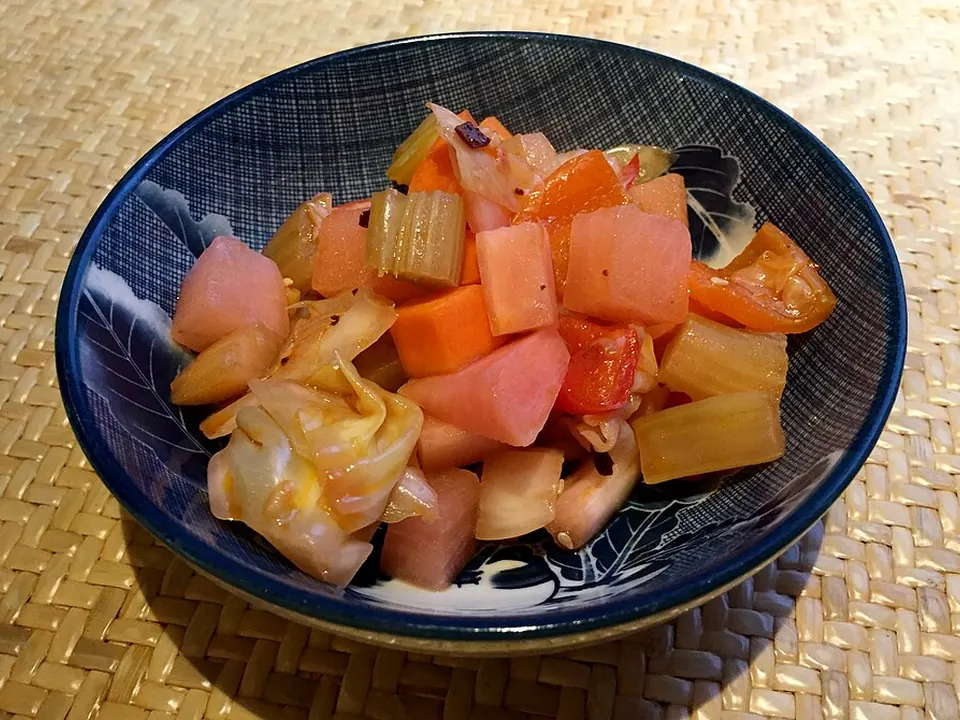
泡菜, photo 1 of 3
泡菜, photo 2 of 3
泡菜, photo 3 of 3
Typical photo

Photo credit

Photo
Sichuan pickles in Beijing (20161122163831)
By
N509FZ
Licence
CC BY-SA 4.0
Source
Wikimedia Commons
Changes
Cropped and resized

Photo credit

Photo
Sichuan pickles at Beijing Yibin Hostel (20210401111017)
By
N509FZ
Licence
CC BY-SA 4.0
Source
Wikimedia Commons
Changes
Cropped and resized

Photo credit

Photo
Tiaoshui Paocai at a restaurant in Jiang'an, Yibin (20250117112257)
By
N509FZ
Licence
CC BY-SA 4.0
Source
Wikimedia Commons
Changes
Cropped and resized

泡菜

pàocài
noun Spice varies #8,104

Measure Word

Meanings

  1. 1 pickled vegetables
  2. 2 pickles
  3. 3 kimchi

About the dish

川菜 Sichuan · 凉菜 Cold dish

Crunchy vegetables such as cabbage, radish and carrot pickled in brine with chili, sour and salty, served cold as a small side dish. In Korean restaurants the word means kimchi, which is hotter.

Characters

Soaked + vegetables - vegetables preserved by soaking in brine or vinegar.

Examples

HSK 3
Nǎinai zìjǐ zuò de pàocài tèbié hǎochī.
The pickles grandma makes herself are especially delicious.
HSK 5
Hánguó rén jīhū měi dùn fàn dōu chī pàocài.
Koreans eat kimchi with almost every meal.
HSK 7-9
Sìchuān pàocài hěn yǒumíng.
Sichuan pickles are very famous.

Tips

culture
Chinese 泡菜 (especially Sichuan-style) is distinct from Korean kimchi, though both are called 泡菜 in Chinese. Sichuan pickles use a salt brine, while Korean kimchi uses chili paste fermentation.

Stroke Order

泡 pào
菜 cài