
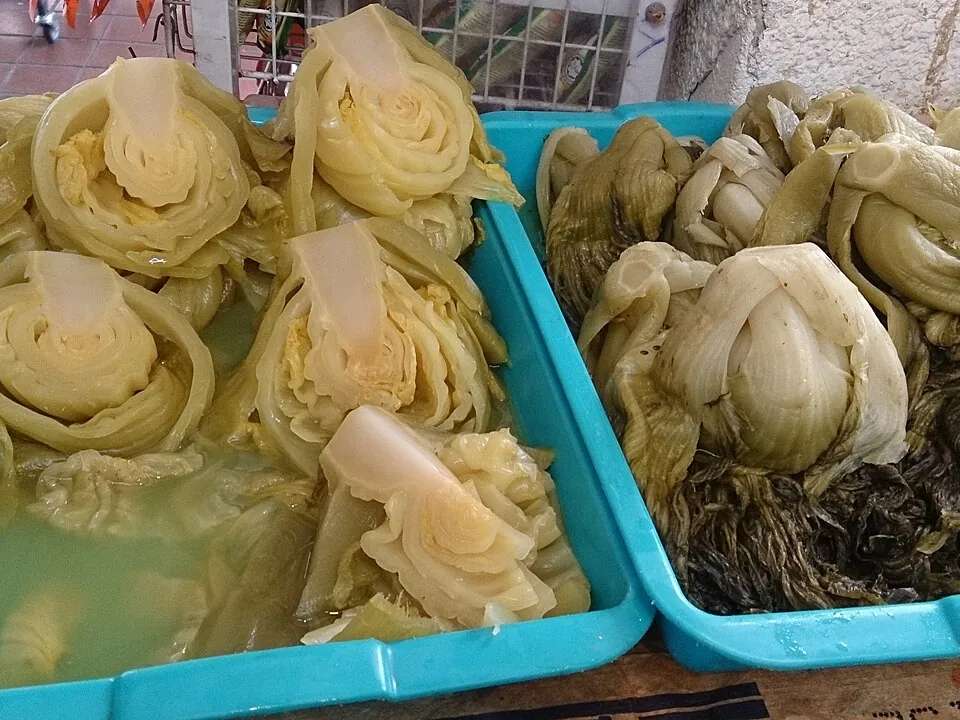
咸菜, photo 1 of 3
咸菜, photo 2 of 3
咸菜, photo 3 of 3

Photo credit

Photo
Salted vegetables
By
ProjectManhattan
Licence
CC BY-SA 3.0
Source
Wikimedia Commons
Changes
Cropped and resized

Photo credit

Photo
咸菜-大理祥云
By
Kcx36
Licence
CC BY-SA 4.0
Source
Wikimedia Commons
Changes
Cropped and resized

Photo credit

Photo
SZ 深圳 Shenzhen 福田 Futian 金田路 Jintian Road shop 福伴超市 Fuban Supermarket food salted 咸梅菜 Meigan Cai May 2026 N13P 01
By
Fonso OWHNB BOOMZ
Licence
CC0
Source
Wikimedia Commons
Changes
Cropped and resized

咸菜

鹹菜
xiáncài
noun #33,555

Measure Word

Meanings

  1. 1 salted vegetables
  2. 2 pickled vegetables
  3. 3 Chinese pickles

About the ingredient

蔬菜 Vegetables

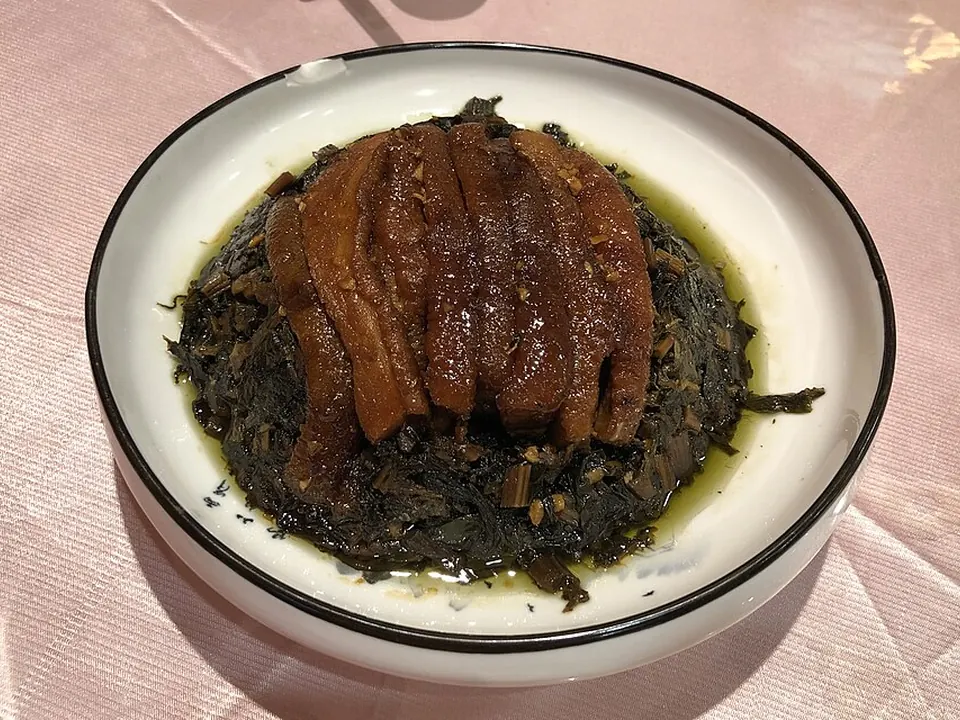
Vegetables preserved in salt, such as mustard greens and radish: salty and strong, so a little goes a long way. It is eaten on its own with meals, or chopped and stir-fried with shredded pork or added to noodles.
Examples

HSK 6
Nǎinai zìjǐ yān xiáncài.
Grandma pickles her own salted vegetables.
HSK 7-9
Zǎocān wǒ xǐhuan chī xīfàn pèi xiáncài.
For breakfast I like to have congee with pickled vegetables.

Tips

culture
咸菜 is a category, not one specific dish: any vegetable preserved in salt - most often Chinese mustard greens (雪里蕻, 雪菜), cabbage, radish, or cucumber. It's a staple side dish for breakfast 稀饭 (congee) and 馒头 (steamed buns), and a humble symbol of frugal home cooking. Compare 泡菜 (pàocài) which can mean either Sichuan brined vegetables or Korean kimchi.

Stroke Order

咸 xián
菜 cài