
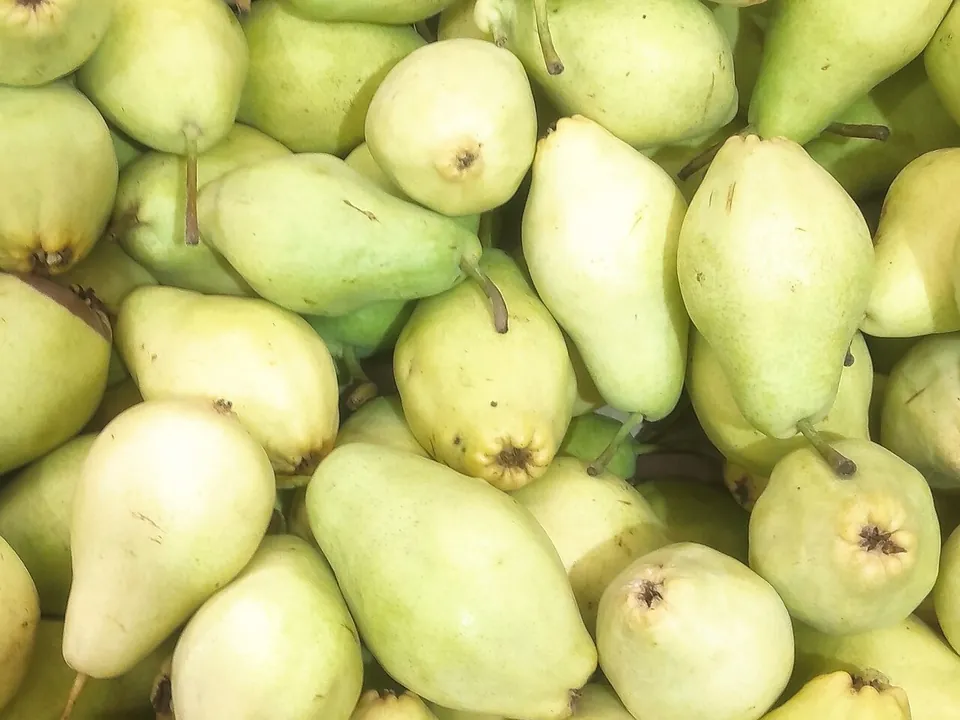
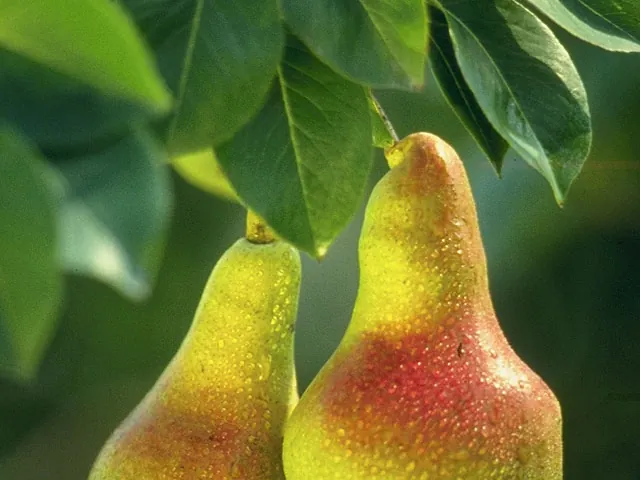
Chinese pears are crisp and very juicy, with slightly grainy flesh, unlike soft European pears. Eaten raw, or steamed or stewed into sweet soups, such as pear with snow fungus in autumn.
In Chinese tradition, you should never split a pear with someone you care about, because 分梨 (split a pear) sounds exactly like 分离 (to separate). It is considered bad luck.
usage
冰糖炖梨 (rock sugar steamed pear) is a classic Chinese home remedy for coughs and sore throats.
Bottom 木 is the tree radical, the indexing component - a stylized drawing of trunk plus branches and roots. Anchors 梨 in the tree-fruit family alongside 桃 peach, 杏 apricot, 李 plum, 柿 persimmon. The radical tells you immediately that 梨 names something that grows on a tree, with the phonetic narrowing it down to pear.
Top 利 supplies the sound - lì shifting to lí, a regular tone movement. 利 is 禾 grain + 刂 knife, an iconic sharp-edge compound. Its semantic role here is faint but real: a pear is a crisp, juicy fruit that the teeth slice cleanly through. Same phonetic family: 犁 plow, 莉 jasmine, 痢 dysentery.