
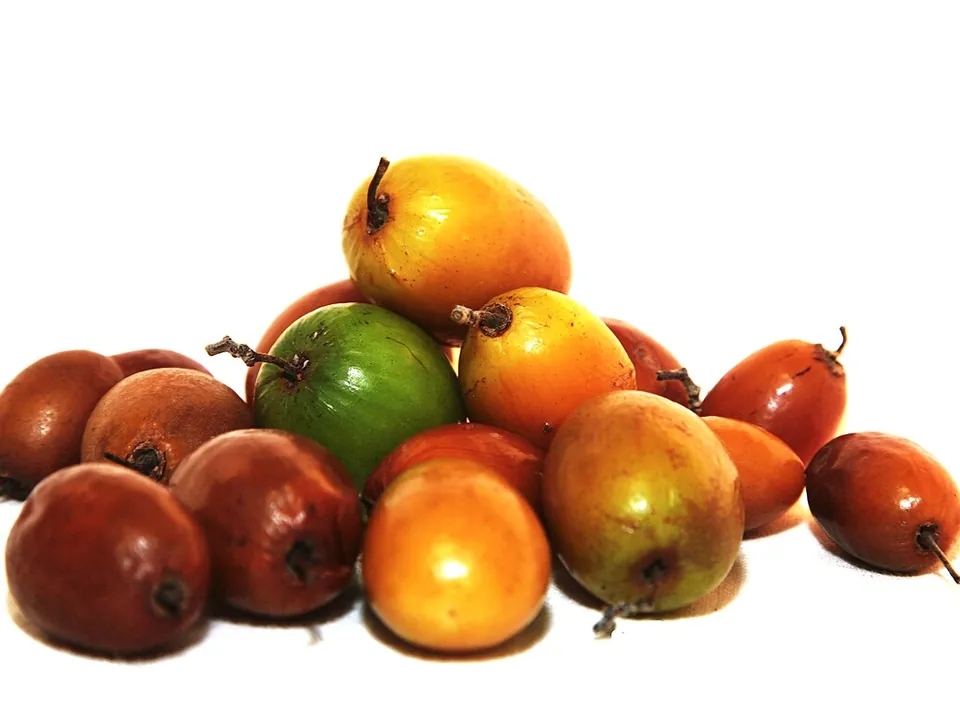
枣, photo 1 of 1

Photo credit

Photo
Jujube n
By
Rémi Tournebize
Licence
CC BY-SA 3.0
Source
Wikimedia Commons
Changes
Cropped and resized

枣

棗
zǎo
noun HSK 7-9 #36,045

Measure Word

一颗枣 kē

Meanings

  1. 1 jujube
  2. 2 Chinese date

About the ingredient

水果 Fruit · In season: autumn

Fresh jujubes are crisp and apple-like, green turning red, and sold in early autumn. Dried, they are the wrinkled 红枣 cooked into porridge, sweet soups, chicken soup and steamed buns.

Examples

HSK 6
Māma yòng zǎo zhǔ le yì guō zhōu.
Mom made a pot of porridge with jujubes.
HSK 7-9
Xīnjiāng de hóngzǎo tèbié tián.
Red dates from Xinjiang are especially sweet.

Tips

culture
Red dates (红枣) are a staple in Chinese cooking and traditional medicine, believed to nourish the blood and boost energy. They're commonly used in soups, teas, and desserts.

Components

phonetic
朿 cì
thorn
Top 朿 supplies the sound - cì drifting to zǎo - and the meaning. 朿 is the original graph for 'thorn,' picturing a thorny branch. Jujube trees are famously thorny, their spines protecting the sweet red fruit. Indexed under Kangxi #75 木 (mù) by tradition, taken from the tree-base inside 朿.
ideograph
⺀ diǎn
two dots (abbreviated lower portion)
Bottom ⺀ - two stylised dots, the 1956 reform's compressed stand-in for the second 朿 of traditional 棗. Not a real component in the etymological sense; just a graphic shortcut signalling 'and another one of these.' The shape preserves the visual rhythm of the doubled-thorn original without writing out the full lower graph.

Filed under radical 木 (mù, #75) by convention. 木 is not a separate component in 枣, so no strokes are highlighted.

Stroke Order

枣 zǎo