荷包蛋, photo 1 of 2
荷包蛋, photo 2 of 2
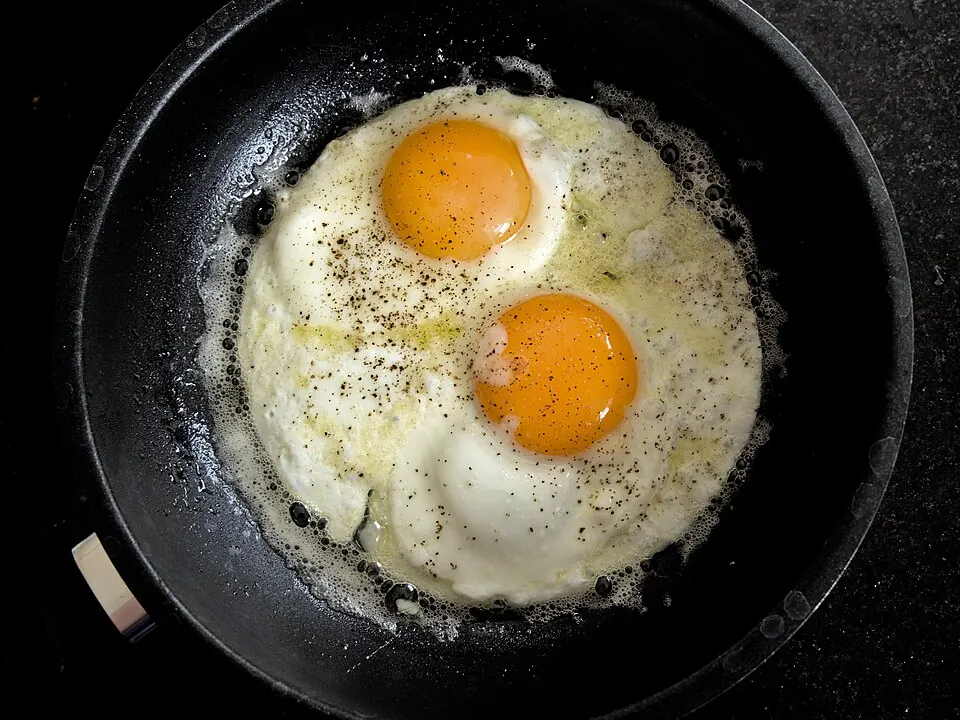
Typical photo

Photo credit

Photo
Two fried eggs
By
Balise42
Licence
CC BY-SA 4.0
Source
Wikimedia Commons
Changes
Cropped and resized

Photo credit

Photo
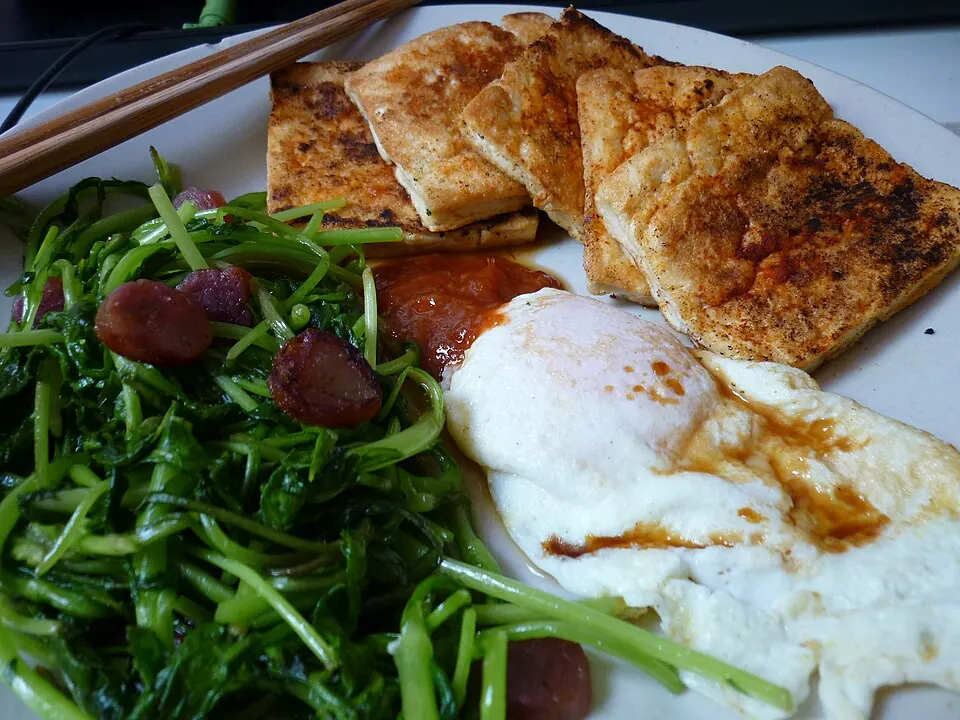
6月12日 臘腸炒茼蒿、香煎豆腐、荷包蛋
By
Singzy
Licence
CC BY 2.0
Source
Wikimedia Commons
Changes
Cropped and resized

荷包蛋

hébāodàn
noun Not spicy #32,358

Measure Word

Meanings

  1. 1 fried egg (sunny-side up or over-easy)
  2. 2 poached egg

About the dish

家常菜 Home-style · 小吃 Snack

A whole egg fried in a pan until the white sets around a soft or firm yolk; in soups it is poached instead. Often an extra on top of a bowl of noodles.

Usually contains egg

Examples

HSK 3
Gěi wǒ lái yì wǎn miàntiáo jiā liǎng gè hébāodàn.
Give me a bowl of noodles with two fried eggs on top.
HSK 4
Zǎocān wǒ xǐhuan chī hébāodàn.
I like fried eggs for breakfast.

Tips

memory
荷包 originally meant a small embroidered pouch or money-purse. The egg gets the name from its plump, pouch-like shape when fried whole. Distinct from 炒蛋 (scrambled eggs) and 煎蛋 (the broader 'pan-fried egg').
culture
In Chinese homes 荷包蛋 specifically means the egg-cracked-whole-into-the-pan style; in many regions a bowl of noodles topped with one is the classic comforting quick meal, and a fixture of birthday breakfasts (长寿面 with a fried egg).

Stroke Order

荷 hé
包 bāo
蛋 dàn