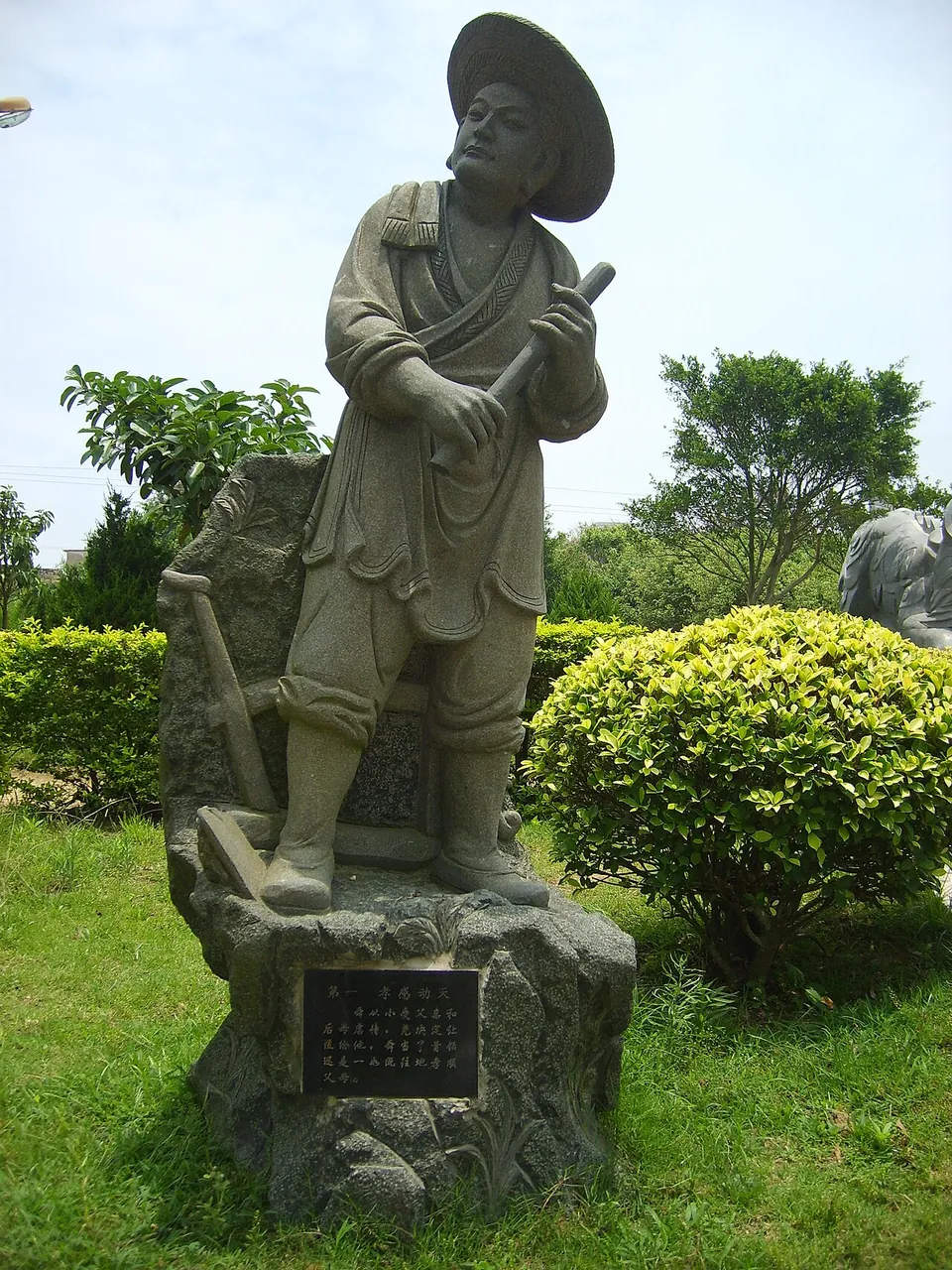
Sage-king of Chinese tradition: a commoner famed for filial piety, chosen by 尧 as heir over his own son, who later passed the throne to 禹. The age of 尧舜 stands for ideal rule in Chinese writing.
Tradition gives him two pupils in each eye, which is said to explain his name 重华, 'double brilliance'. His story opens the 二十四孝: elephants ploughed and birds weeded his fields because his devotion to his parents moved Heaven.
history
The literary 'rose-of-Sharon' meaning comes from 《诗经》 - 颜如舜华 ('a face like the hibiscus flower') - where 舜 is a phonetic loan for 蕣, the day-blooming hibiscus. The poetic image is fragile beauty: the flower opens at dawn and falls by evening.
Components
pictograph
舜Shùn
Shun; hibiscus
Single graph - small-seal analysis takes the top as a creeping vine and the bottom 舛 (two feet pointing apart) as the radical (Kangxi #136), suggesting a spreading climbing plant - the original 'hibiscus / morning-glory' sense. The sage-king name is a phonetic borrowing. Indexed under 舛 in traditional lookup.
Filed under radical 舛 (chuǎn, #136) by convention. 舛 is not a separate component in 舜, so no strokes are highlighted.